
This post was originally published on this site.
This isn’t the first time The Snarky Editor has called out authors of historical fiction for referring to things, people, and attitudes which didn’t yet exist in the time when the story is set. But there are just so many examples, she can’t help herself.
All of these stories are supposed to happen during the British Regency period (1811-1820) but include references that would leave real people of the time lost and floundering.
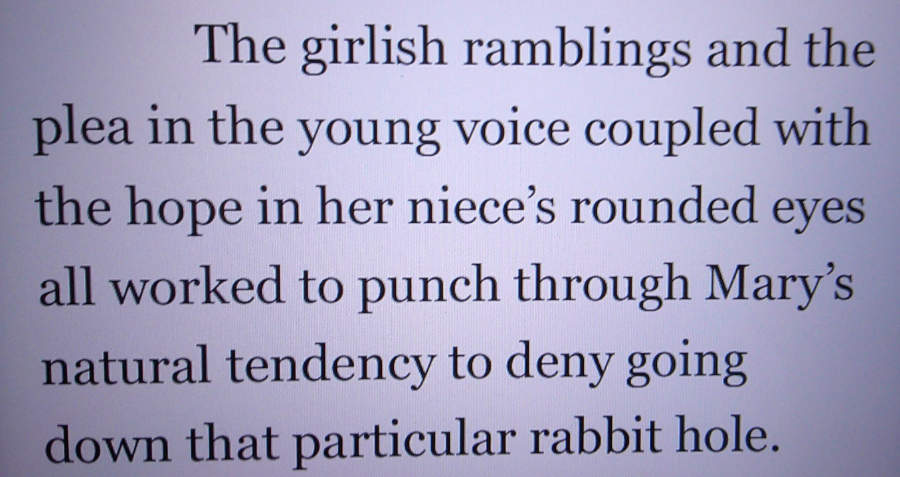
… Mary’s natural tendency to deny going down that particular rabbit hole.
“Down the rabbit hole” is a reference to the strange, surreal, convoluted journey taken by Alice when she followed the White Rabbit in Lewis Carroll’s Alice’s Adventures in Wonderland. But Alice was first published in 1865, making this reference from a book set in 1815 an anachronism.
Equally open to question when they appear in historical fiction are references to the Cheshire cat’s smile, to the Red Queen’s anger, and to the Caterpillar’s hookah. All of them also sprang from the fertile imagination of Alice’s creator. So did Tweedledee and Tweedledum, by the way, but they first appeared in the sequel, Through the Looking Glass and What Alice Found There, published in 1871. Carroll’s Mad Hatter, however, is based on a saying first published in 1829. Mad as a hatter refers to the accidental poisoning of hatters who worked with mercury in creating felt hats, resulting in tremors, hallucinations, and erratic behavior.
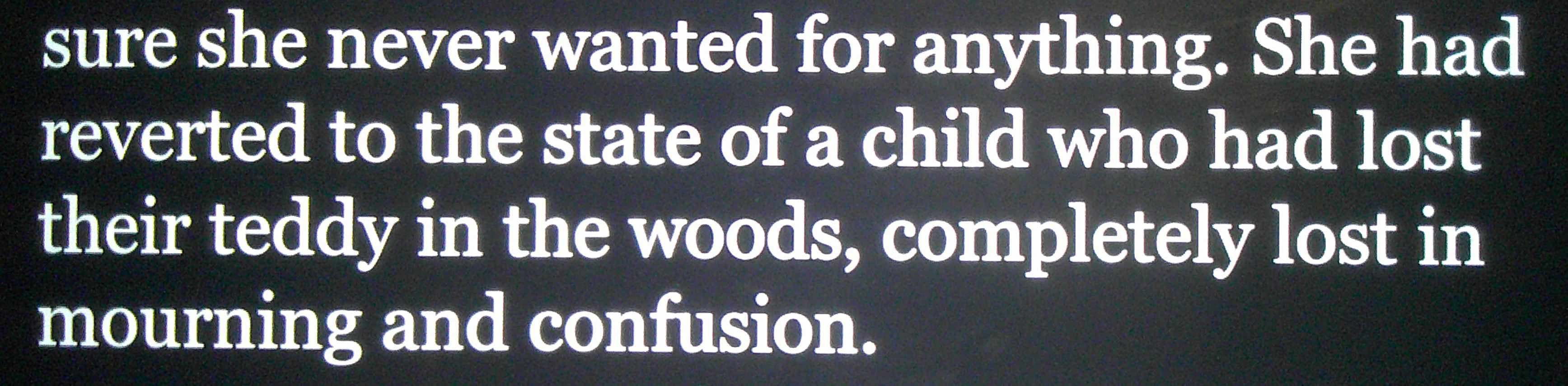
…a child who had lost their teddy in the woods…
While children have probably always been attached to and comforted by soft items, the cuddly plush toy is a modern invention. Specifically, the teddy bear is a creature of the early 20th century. The toy was created almost simultaneously in the U.S. and Germany, and it was named for President Theodore Roosevelt after he refused to shoot a tethered black bear on a Mississippi hunting trip in 1902. It’s therefore not appropriate for use in the context of this example, which again is set in the Regency period of the early 1800s.
The larger issue is that our modern-day notions about the role of toys often don’t jive with the reality — where many “toys” encouraged children to practice the roles they would take on in adulthood, rather than simply to play for fun.
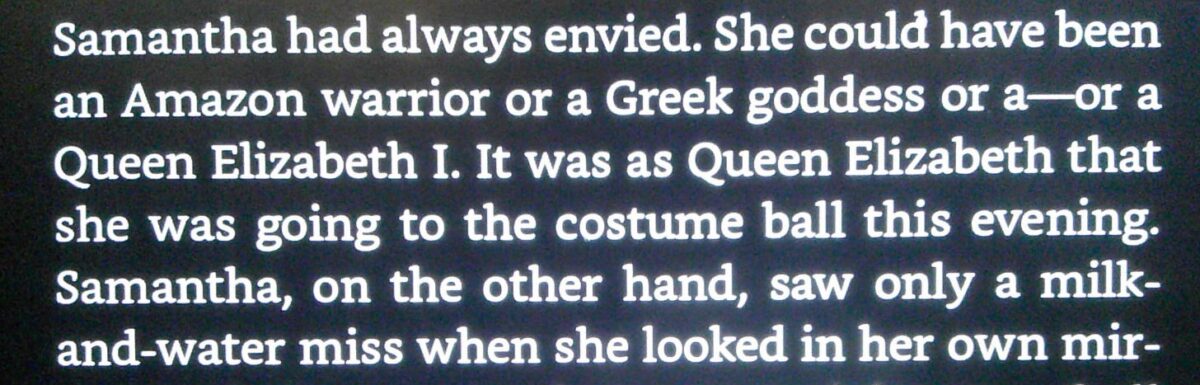
She could have been an Amazon warrior or a Greek goddess or a —or a Queen Elizabeth I.
Elizabeth Tudor reigned from 1558 to 1603, but she wasn’t known as Queen Elizabeth the First until 1952 when Princess Elizabeth Alexandra Mary became Queen Elizabeth II. In any book set before the middle of the 20th century, the former queen would have been simply Queen Elizabeth — the only one of her name.
Since the costume ball in this book is happening in the early 1800s, this character would be dressing as Queen Elizabeth.
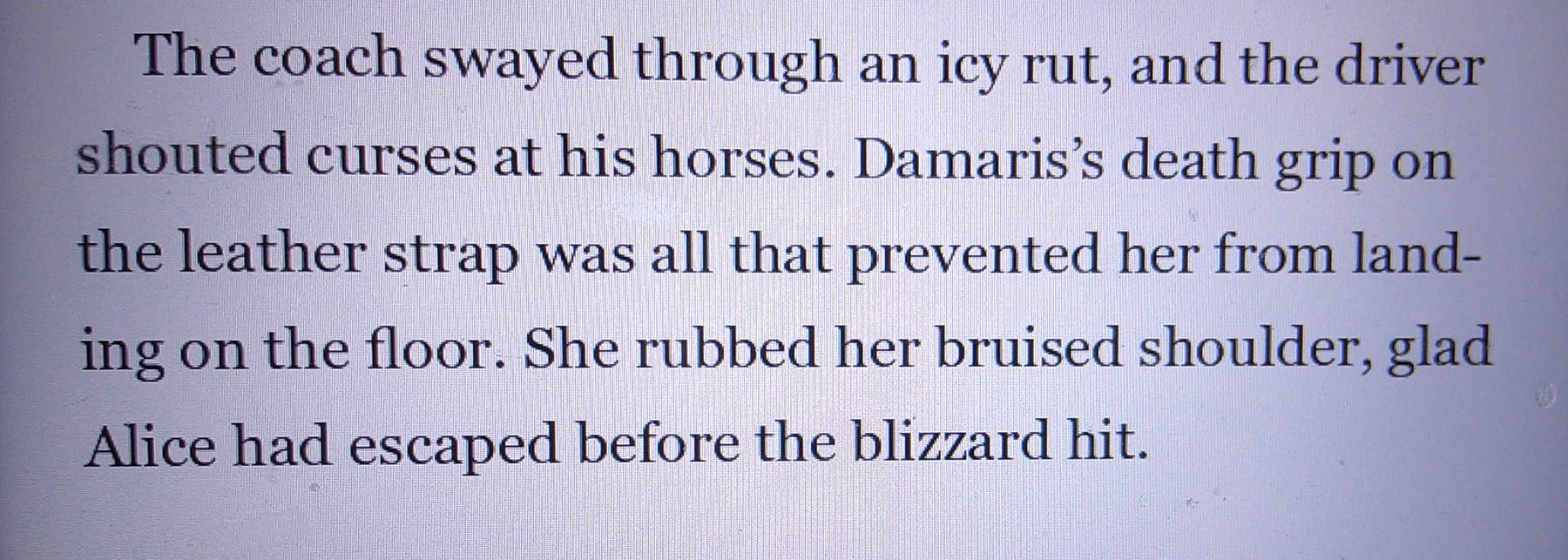
She rubbed her bruised shoulder, glad Alice had escaped before the blizzard hit.
While there have always been bad snowstorms, they weren’t known as blizzards until 1870 when a newspaper in Estherville, Iowa, used the term to refer to the combination of strong wind and blowing snow — a good 50 years after the time period depicted in this example.
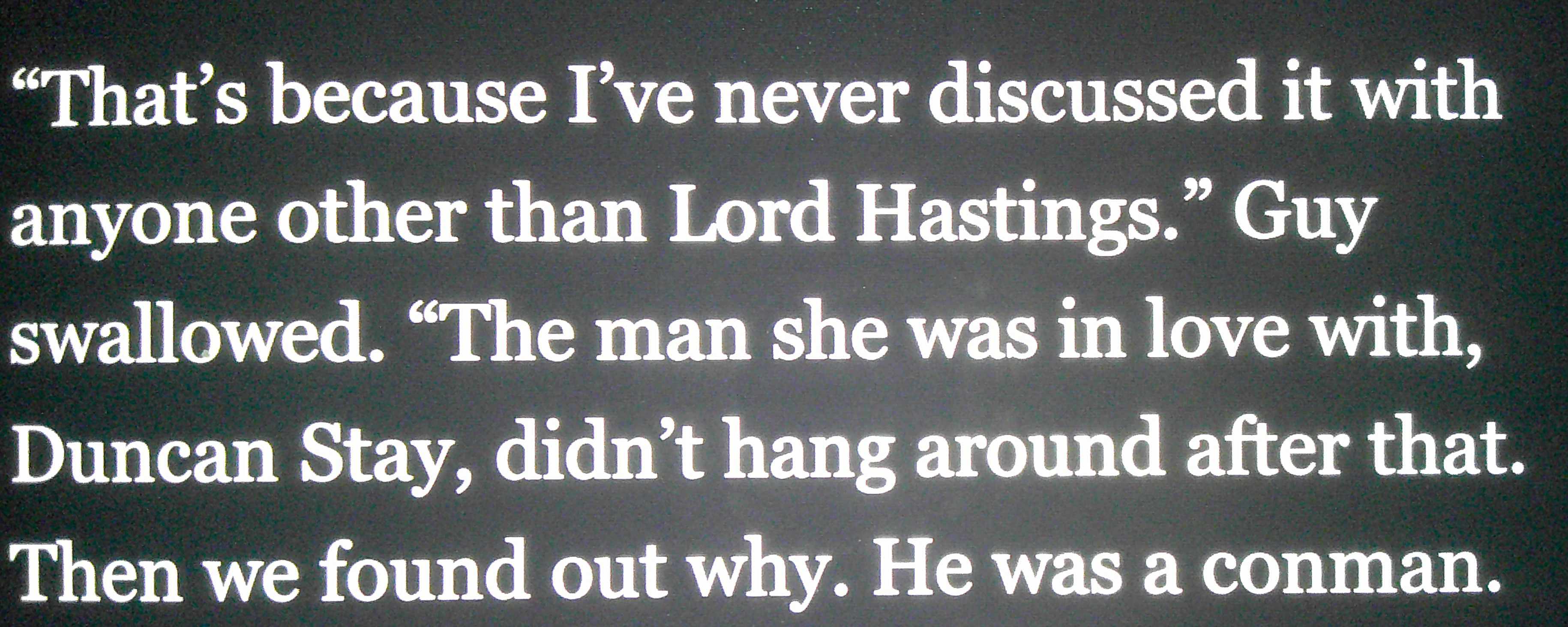
The man she was in love with, Duncan Stay, didn’t hang around after that … He was a conman.
Conman, or con man, is short for confidence man, one who gains the confidence of others in order to take advantage of them. The term was first used in New York City newspapers around 1850, too late for use in the time period of this book, set in the early 1800s.
Interestingly, the modern-sounding slang term hang around is actually older than conman is. It was first used in the 1820s as a synonym for loitering or idling. Still too late to fit with the time period of this example, but much closer than one would think.
If the story of Teddy’s Bear gives you shivers, stop and think about this: In 1902, it was considered jolly good sport to shoot a bear who was tied up and couldn’t run or defend itself. The excitement of the story at the time — the reason it got all the publicity, and the reason that the teddy bear got its name — was that President Roosevelt was acting in an unusual way when he wouldn’t take the shot.
Authors have to navigate a minefield (a word first used in the 1870s, by the way) when they try to accurately depict the attitudes and opinions of people who lived in past eras.
Of course, these issues are of greatest signficance to writers of historical fiction. But time-period accuracy is something all authors should be aware of — because many of our everyday expressions spring from specific, if sometimes hard to identify, time periods.
The Snarky Editor comes out of hiding occasionally to comment on the awkward, silly, and sometimes hilarious editing errors found in published books.
#snarkyeditor #everybodyneedsaneditor
Leigh Michaels is the award-winning author of more than 100 books, including historical and contemporary romance, non-fiction books about writing, and local history. More than 35 million copies of her books are in print in 27 languages and more than 120 countries. She is also a writing coach and book editor, though she promises to be snarky only in regard to published books.
To find out more, check out https://leighmichaels.com
Leave a Reply