
This post was originally published on this site.
The Snarky Editor comes out to play when she discovers egregious and often hilarious errors in published books. But The Snarky Editor has a softer and more helpful side as well, the side that’s known as Leigh Michaels.
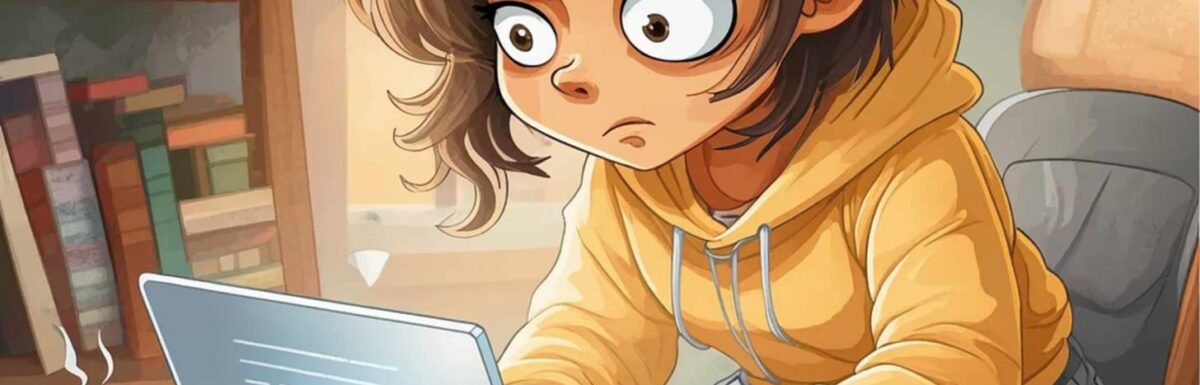
A student recently commented that getting advice about how to revise her writing made her feel confused and overwhelmed, and she asked for (in a manner of speaking) advice about how to handle advice. It’s a really crucial question: How can writers sort through feedback so we can use it to best advantage?
There are a couple of times when feedback is most valuable. The first is early in the writing process, when the most useful feedback consists of brainstorming ideas, sorting out characters and plot direction, and anticipating potential trouble spots so you can avoid them as you write the story.
The second time is after there’s a complete or nearly complete first draft, when the reader can look at the entire story and help figure out how to make it better. (And it can always be made better.)
In between, there’s a big wide sea of time and effort when feedback may just confuse things and lead to so much discouragement that the book never gets finished.
So here are a few things that I suggest:
When you look at feedback, think about the meanings underneath what your reader is saying. If your reader says, “You should kill your main character!”, they might really be saying that they don’t understand or sympathize with how he’s acting, and a more useful action might be a better explanation of his motives or a more balanced view so we see more than just a nasty side of him. Keep in mind that sometimes what the reader is saying is an indicator rather than actual advice.
In the moment, it’s easy to be overwhelmed by comments. Rather than act immediately on the feedback, print it out or otherwise save it to look back at later — when you have more distance, and when more of the book is written.
When you’re ready to take in the comments, consider each one individually. Does it resonate with you? Do you find yourself thinking, “Ah, yes, I knew something was wrong there.” Or do you find yourself thinking, “Did this person even read the book I’m writing?”
(That second person may really be giving you wonderful feedback anyway. We’re all resistant to being told our work isn’t great just as it stands. But if the feedback doesn’t resonate with you, set it aside for now. Come back to it later and look again.)
Not all feedback is helpful, and not all feedback applies to a particular story. Sometimes a reader gets caught up in thinking about the story she’d prefer to read, rather than the one the author is working on. Comments that try to make the book into a different story entirely are not uncommon. File them away and move on.
The author’s responsibility is to listen respectfully to all feedback, to give thoughtful and serious consideration to all comments, and thento keep the parts that make sense, act on them, and ignore the rest.
If you’re opting to ignore a piece of feedback, however, think about why. Why would making this change actually hurt the story and the book? If you can enunciate that, you’ve come a long way toward learning to apply advice and sort out what’s helpful and what’s not. If you can’t give a reason, then perhaps your resistance to the feedback is misplaced. Not wanting to do the necessary work isn’t a reason to pass over a comment.
When you take a class, you might think about using a new idea, or a story that’s not yet dear to your heart, so the feedback you receive is more likely to be helpful. Most of the time, an author’s first idea doesn’t end up being a book. Developing and writing it is still a valuable learning experience, because when you start to work on a new story, you’ll be able to spot and avoid the issues which lurked in the first one, making the next experience smoother and more productive.
It took six complete manuscripts for me to figure out what I was doing — how to tell a complete story, how to create enough conflict to keep a story going rather than trickling off halfway, how to decide on an ending early so I could write toward it rather than coming up to the last chapter with no idea of who had committed the murder (and yes, that really happened).
But I didn’t have the benefit of classes or early feedback. I hope things will go faster than that for you. Keep in mind, however, that nothing is wasted. Everything we write is useful practice in developing our style, our voice, and our skill — and it’s all important in helping us learn to tell OUR stories, in OUR way.
What do you think? Share your thoughts, your experience, your examples, your questions. Is there a topic you’d like to see addressed?
The Snarky Editor’s Softer Side is represented by author / editor / teacher / writing coach Leigh Michaels, commenting on random topics of interest to writers and readers. Leigh is the award-winning author of more than 100 books. (The Snarky Editor herself mainly comes out to play when she discovers egregious and often hilarious errors in published books.)
To find out more, check out https://leighmichaels.com
#snarkyeditor #everybodyneedsaneditor #writingtips
Leave a Reply