
Part of an author’s job is to create pictures in the reader’s mind, so the reader who’s actually looking at nothing more than squiggly letters on a page (or a screen) can visualize the scene, imagine the characters, and see the action happening.
What we see as we write, while we watch our characters interact, isn’t always what the reader sees. First we have to put those images into words. But choosing just the right details — adding exactly the right facts to paint that picture — is a tough job. Sometimes, in an effort to create visual images in the reader’s mind, we go too far. Or we put things in the wrong place.
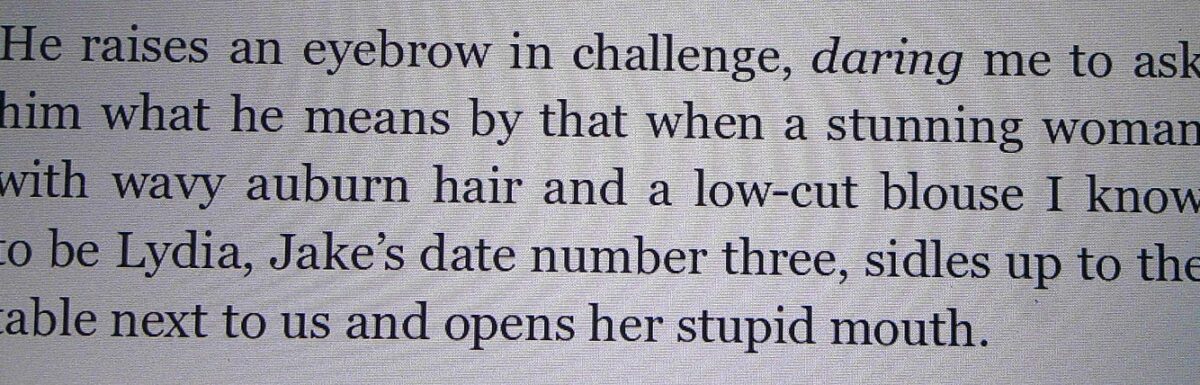
…a stunning woman with wavy auburn hair and a low-cut blouse I know to be Lydia…
If the blouse is named Lydia, what’s her skirt called?
A stunning woman named Lydia, with wavy auburn hair and a low-cut blouse…
It’s still not a prize-winning sentence, but it’s clearer. Breaking it up a bit would help even more, and do we need every detail to get the picture?
He raises an eyebrow in challenge, daring me to ask him what he means. A stunning woman named Lydia, Jake’s date number three, sidles up to the table next to us and opens her stupid mouth.
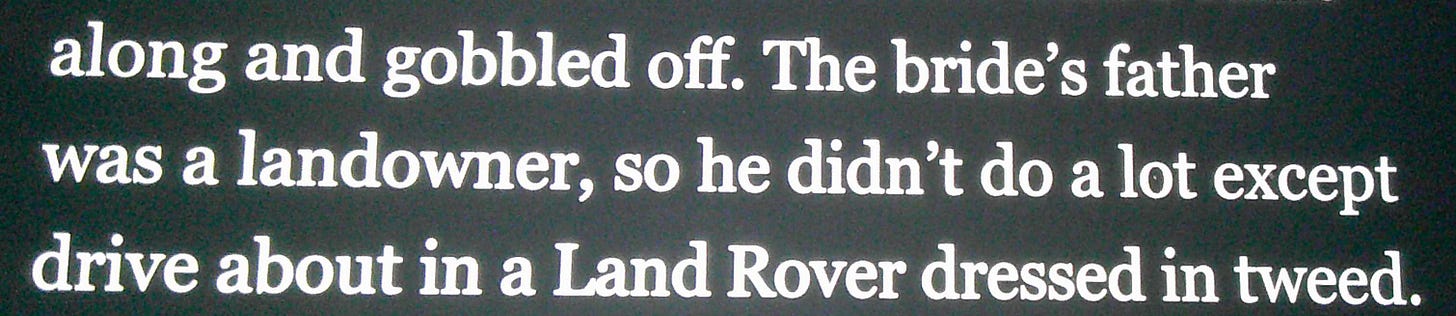
The bride’s father was a landowner, so he didn’t do a lot except drive about in a Land Rover dressed in tweed.
Did the Land Rover always wear tweed, or did it put on a tuxedo for formal occasions?
The bride’s father was a landowner, so he didn’t do a lot except dress in tweed and drive about in a Land Rover.
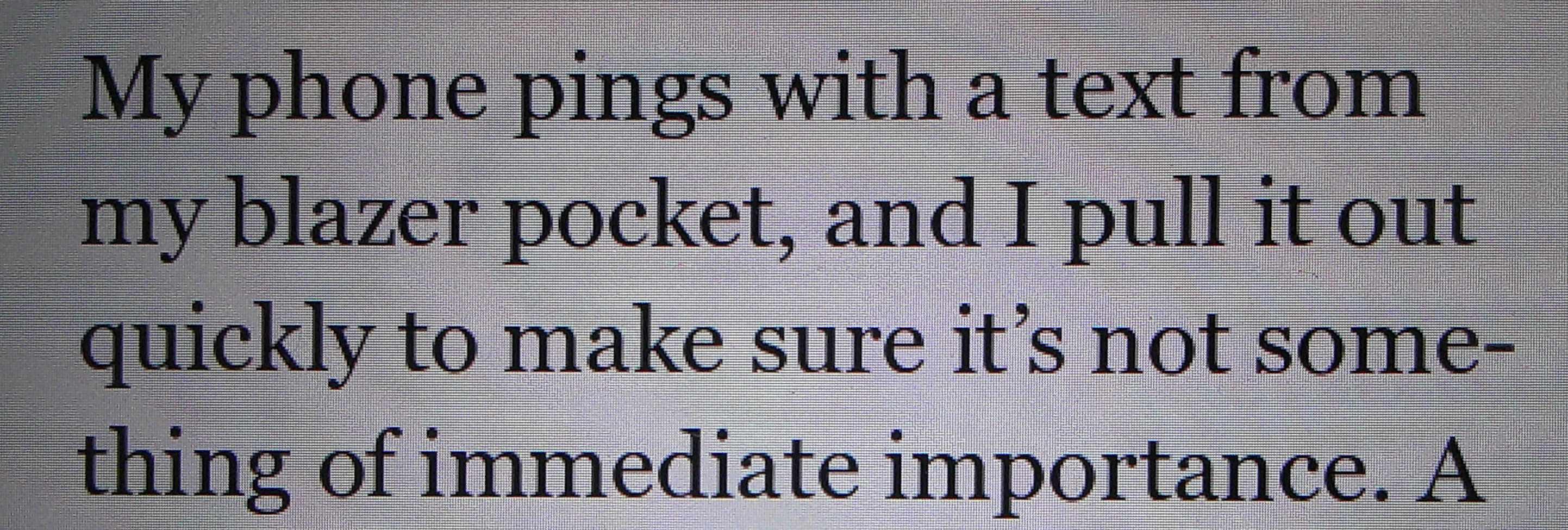
My phone pings with a text from my blazer pocket….
The Snarky Editor wonders what the blazer pocket wanted to know, and how it managed to text with no thumbs.
From my blazer pocket, my phone pings with a text…
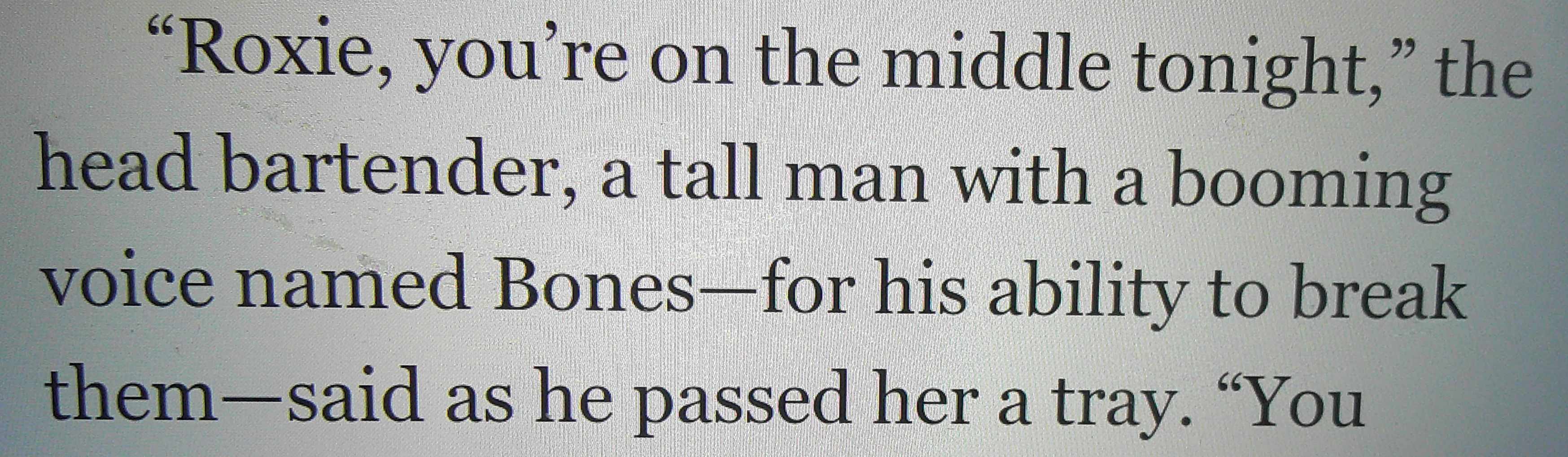
…the head bartender, a tall man with a booming voice named Bones — for his ability to break them — said as he passed her a tray.
His voice was named Bones? Odd.
…the head bartender, a tall man named Bones — for his ability to break them — said in a booming voice as he passed her a tray.
It’s never going to be Pulizer Prize-winning writing, but simply putting the modifying clause next to the noun it modifies makes a better sentence. Breaking the passage up into a couple of sentences, or choosing which facts are truly important and deleting the rest, would be better options. If the bartender isn’t an important character, The Snarky Editor recommends chopping back how much we say about him. The origin of his nickname? — that’s a cool story and a telling detail. The booming voice? Not so much.
“Roxie, you’re on the middle tonight,” the head bartender said as he passed her a tray. He was a tall man named Bones — for his ability to break them.
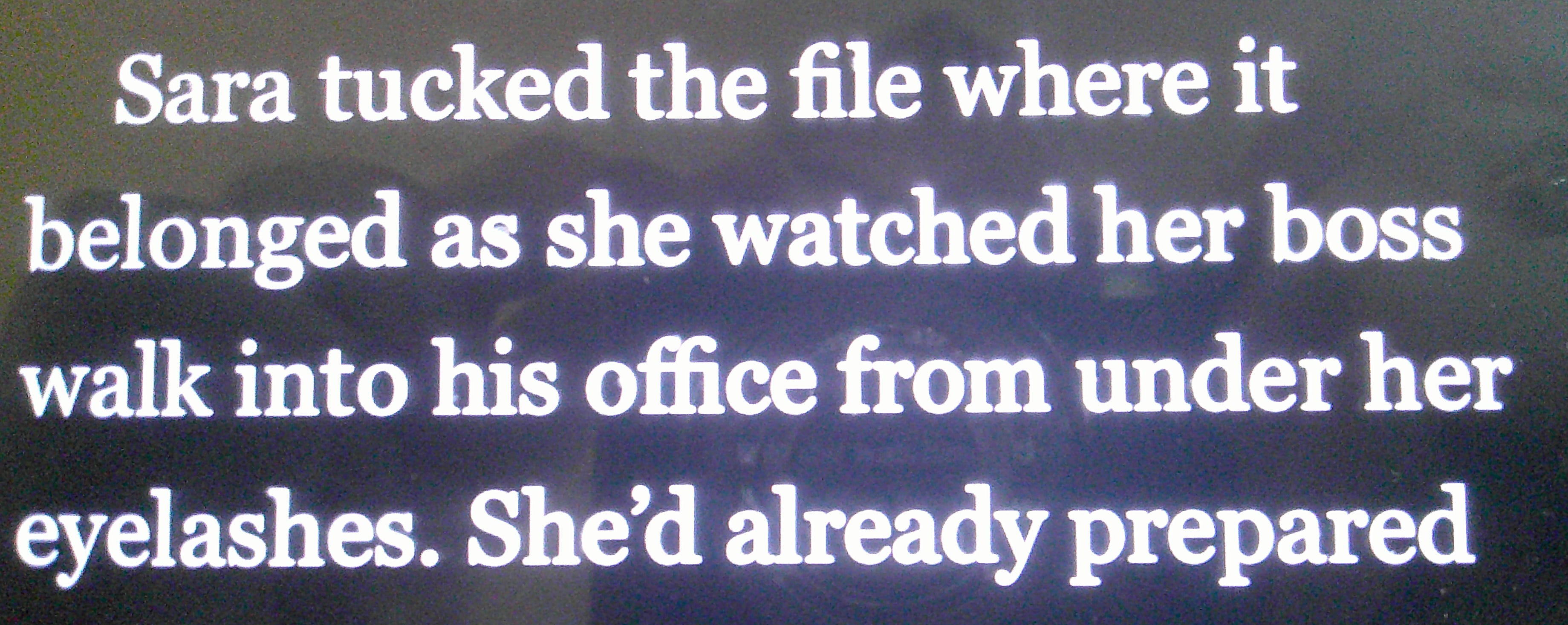
Sara tucked the file where it belonged as she watched her boss walk into his office from under her eyelashes.
Strange. The Snarky Editor expected him to come from a hallway, or perhaps from a reception room, rather than from under his employee’s eyelashes. Sounds painful.
Sara tucked the file where it belonged. From under her eyelashes, she watched her boss walk into his office.
When a sentence gets long and creaky, breaking it into two is often a better option.
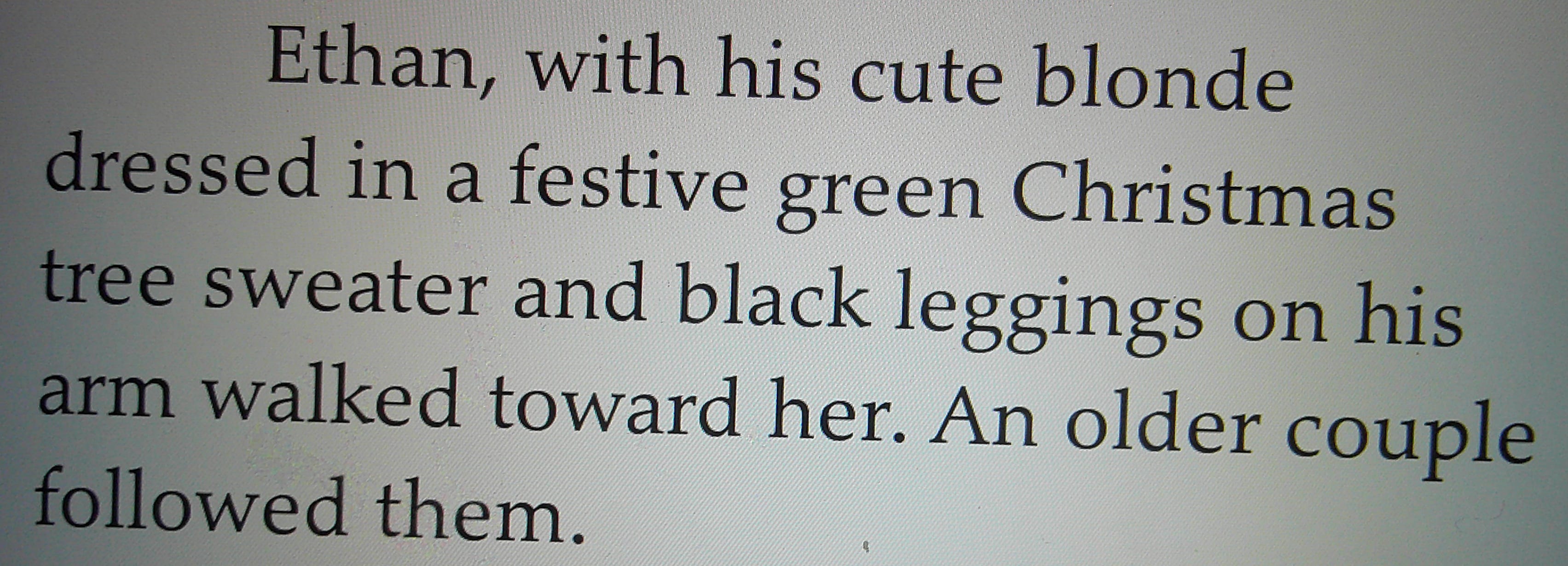
Ethan, with his cute blonde dressed in a festive green Christmas tree sweater and black leggings on his arm walked toward her. An older couple followed them.
He’s wearing leggings on his arm? The Snarky Editor hopes that sweater she’s wearing is long enough to cover her bum.
This is a classic case of asking one sentence to carry far too much information. Rearranging and moving part of the freight into the following sentence helps a little.
The cute blonde on Ethan’s arm was dressed in a festive green Christmas tree sweater and black leggings. They walked toward her, followed by an older couple.
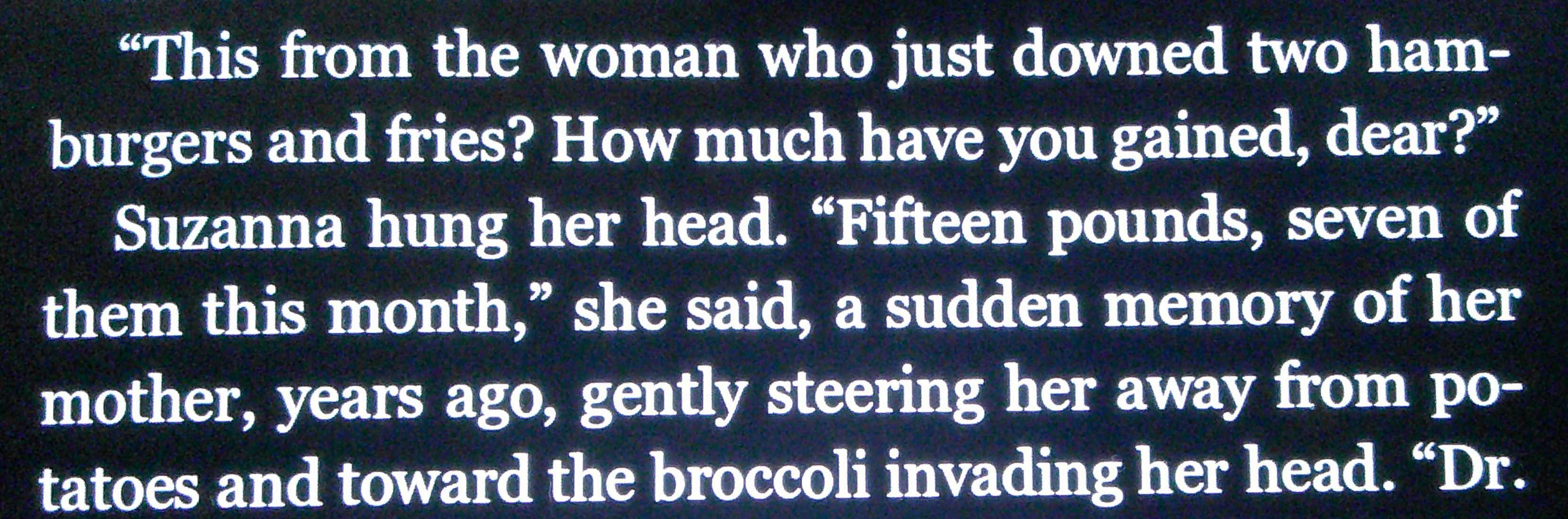
… she said, a sudden memory of her mother, years ago, gently steering her away from potatoes and toward the broccoli invading her head.
The Snarky Editor once saw a photo of a brain that made it look like cooked cauliflower, but broccoli invading a brain is straight out of science fiction.
… she said, as a sudden memory invaded her head of how her mother, years ago, had gently steered her away from potatoes and toward the broccoli.
The Snarky Editor isn’t fond of the “invaded her head” line, but rearranging the sentence at least helps to keep the Pod People image at bay. Simplifying makes it stronger:
… she said, remembering how her mother, years ago, had gently steered her away from potatoes and toward the broccoli.
The Snarky Editor comes out of hiding occasionally to comment on the awkward, silly, and sometimes hilarious editing errors found in published books.
#snarkyeditor #everybodyneedsaneditor
Leigh Michaels is the award-winning author of more than 100 books, including historical and contemporary romance, non-fiction books about writing, and local history. More than 35 million copies of her books are in print in 27 languages and more than 120 countries. She is also a writing coach and book editor, though she promises to be snarky only in regard to published books.
To find out more, check out https://leighmichaels.com
Leave a Reply