
Remember when your third-grade teacher told you not to use he said and she said all the time? Here’s a secret: She only told you that because you were using it all the time, with no relief and no variation.
The truth is, there’s nothing wrong with he said and she said, as long as they’re used in moderation. And a simple he said is a whole lot more appealing than some of the attributions The Snarky Editor sees from time to time. Like these:
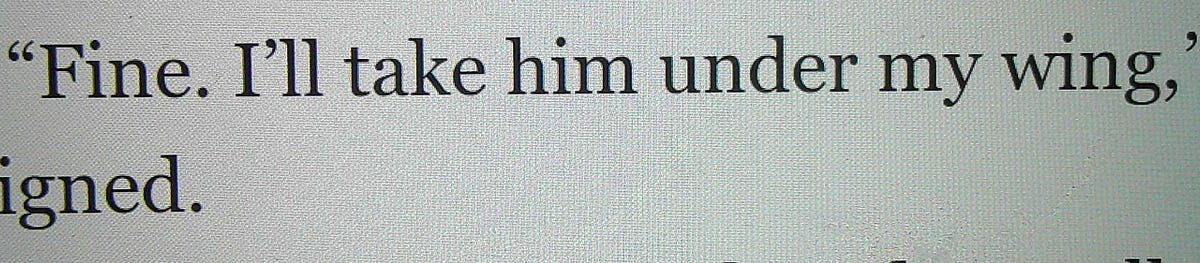
“I’ll take him under my wing,” I resigned.
Hoo, boy. What this author meant was that the character argued a bit before giving in, and therefore he was resigned to taking the requested action. But the shorthand version simply doesn’t work. Try one of these instead: “I’ll take him under my wing,” I said, resigned. Or “I’ll take him under my wing.” I was resigned. Or, for that matter, pretty much anything other than saying I resigned — unless, of course, you’re talking about leaving a job.
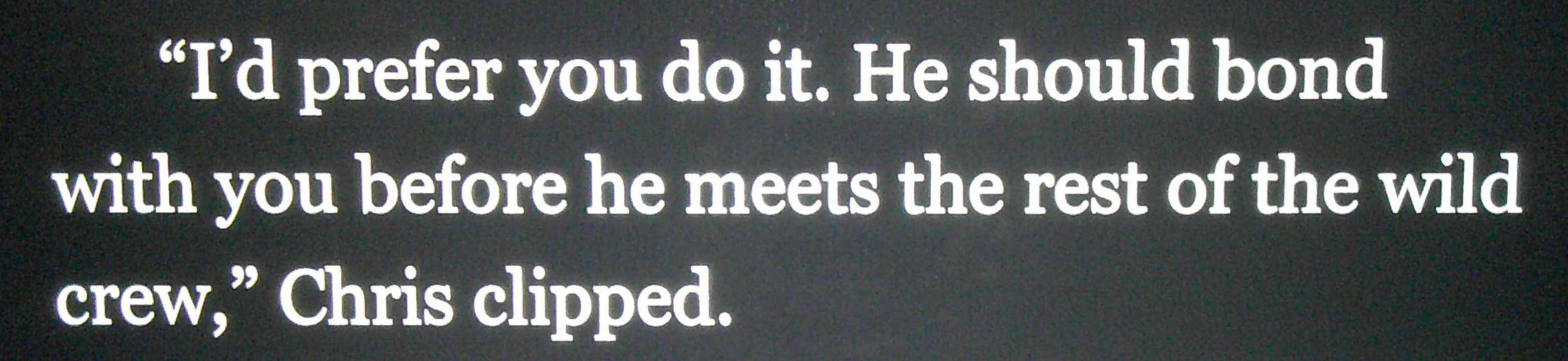
“He should bond with you before he meets the rest of the wild crew,” Chris clipped.
Clipped works better for hair or packs of paper, not dialogue. If the character is speaking firmly or briefly, just say so. “He should bond with you before he meets the rest of the wild crew.” Chris’s tone was clipped.

“On obstruction of justice,” he flatlines as if he doesn’t believe it himself.
The Snarky Editor would like to flatline the author who committed this monstrocity rather than just writing “On obstruction of justice,” he says flatly, as if he doesn’t believe it himself. It’s still not the world’s best or clearest sentence, but it’s a big improvement over using a medical term to describe a style of speaking.

“I’ll need something,” I flatline her way…
This author found a word he liked and stuck with it, doubling down on the ridiculous. It’s hard to even tell what he meant here, because the attribution is such an inapppropriate choice. Is the character speaking without intonation? Is the character being droll? Is the character issuing a firm order? The Snarky Editor has no idea.
Odd attributions call attention to themselves and interrupt the narrative. But the simple construction he said or she said does its job while almost disappearing from the reader’s mind.
Repeat after The Snarky Editor: There is nothing wrong with he said and she said, when used in moderation. It’s only when they’re used all the time, without variation or relief, that he said / she said becomes a pattern that is uncomfortable to the reader’s ear.
A few other attribution verbs are useful, clear, and helpful. Whispered, yelled, gasped — words like those have specific meanings that are hard to present on the page in any other way. But when you’re looking for variety, don’t reach for odd verbs. Instead, think about showing what actions the characters are taking — because that not only tells the reader who’s talking, it helps paint the scene so the reader can see the story’s events unfold.
The Snarky Editor comes out of hiding occasionally to comment on the awkward, silly, and sometimes hilarious editing errors found in published books.
#snarkyeditor #everybodyneedsaneditor
Leigh Michaels is the award-winning author of more than 100 books, including historical and contemporary romance, non-fiction books about writing, and local history. More than 35 million copies of her books are in print in 27 languages and more than 120 countries. She is also a writing coach and book editor, though she promises to be snarky only in regard to published books.
To find out more, check out https://leighmichaels.com
Leave a Reply